


TABLE OF CONTENTS
It can be difficult to choose the best resource planning solution for you when there are so many options available. You need to decide which tool is best, but you also know that you want to set reasonable deadlines and make the most efficient use of your resources. You’re in my hands! With my selections of the top resource planning software, I’ll make your decision easier in this post by sharing my personal experiences with dozens of different resourcing tools with large teams and projects.
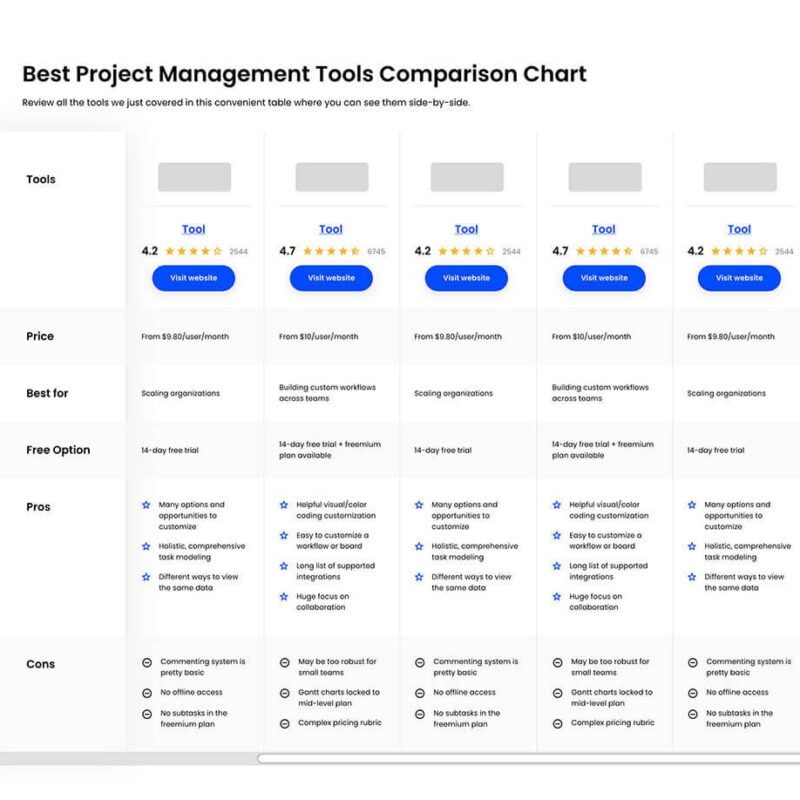
Compare Software Specs Side by Side
Use our comparison chart to review and evaluate software specs side-by-side.
How To Choose Resource Planning Software
With so many different resource planning software solutions available, it can be challenging to make decisions on what resource planning software is going to be the best fit for your needs.
As you’re shortlisting, trialing, and selecting resource planning software consider the following:
- What problem are you trying to solve – To determine the features and functionality that the resource planning software must have, start by determining the feature gap that you are attempting to fill.
- Who will need to use it – Take into account who will use the software and how many licenses you’ll need when evaluating costs and requirements. You must determine whether access will be needed by the entire organization or just the project team. Once that’s evident, you should think about whether you’re prioritizing speed for your resource planning software power users or ease of use for everyone.
- What other tools it needs to work with – Make it clear which tools you’re replacing, which ones you’re keeping, and which tools—like accounting, CRM, or HR software—you’ll need to integrate with. It is up to you to determine whether the tools must work together or if you can use a single, integrated resource planning program to replace several different tools.
- What outcomes are important – Think about the outcome that the program must produce in order to be deemed successful. Think about the skills you wish to acquire or develop, as well as the success criteria you will use. One of the results might be the capacity to see performance more clearly. You could compare the features of resource planning software until your eyes are blue, but you risk wasting a lot of precious time if you aren’t considering the results you hope to achieve.
How it would work within your organization Think about the software choice in conjunction with your delivery strategy and workflows. Examine the things that are going well and the areas that require attention that are causing problems. Keep in mind that every company is unique, so don’t assume that just because a tool is well-liked, it will function well for you too.
Featured Tools
Best Resource Planning Software Reviews
This is a list of the 10 best resource planning software. I have highlighted what I think is the best use case for each one.
Parallax
Best resource forecasting features

Parallax is a cloud-based resource planning software tool that gives enterprises visibility into the organization’s usage and allocation of their resources. With its intuitive dashboard, users can easily monitor resource utilization in real time and make informed decisions about where they should allocate resources to maximize efficiency. It offers insights into resource trends over time, allowing users to identify areas where resources are being wasted or underutilized.
Why I Picked Parallax: Parallax’s smart algorithms allow users to quickly gain insights into resource utilization by analyzing data from multiple sources, including spreadsheets, databases, and other systems. The data can be visualized on an interactive dashboard which allows users to track performance metrics such as project progress and cost savings.
Parallax’s forecasting feature offers a comprehensive resource planning solution to help businesses increase their efficiency and productivity. This tool leverages advanced forecasting algorithms that analyze historical data and use machine learning techniques to generate accurate forecasts of resource availability. With this feature, businesses can accurately predict the quantity and types of resources they need in the future. They can then use this information to plan for upcoming projects, optimize existing workloads, and develop effective strategies for deploying available resources.
The forecasting capability of Parallax further enables users to anticipate potential risks, allowing for smarter risk management decisions and greater continuity in operations. The resource allocation tools within Parallax include drag-and-drop functionality to make assigning tasks easy and straightforward. Additionally, team members can be selected from pre-defined lists, speeding up the selection process for projects with large teams. With Parallax’s automated tracking capabilities, users can monitor their project’s progress in real time as resources are allocated, and work is completed.
Parallax Standout Features & Integrations
Features include resource management, budgeting, dashboards, notifications, API, data visualizations, external integrations, forecasting, multi-user, and scheduling.
Integrations include Salesforce, Oracle Netsuite, Asana, Slack, Harvest, Hubspot, Microsoft Teams, Jira Software, Tempo, and more.
ClickTime
Best for balancing staff workloads and progress in real-time

ClickTime is a comprehensive resource planning system that can help your organization better predict hiring needs, plan team sizes, and schedule employee workloads.
Why I picked ClickTime: The software’s capacity management heatmap shows staff hours available and assigned at a glance, helping you out with real-time resource planning while avoiding individual overloading and burnout. You can see where staff are spending their time, by project and task, to optimize staffing in future time periods.
In addition to real-time staffing, the software also shows you team capacity up to 6 months out. This helps you plan to take on new projects and clients as well as hire staff, leading to informed business decisions. The software’s customizable views help you grasp your team’s capacity and staffing levels by role, division, or employee.
ClickTime Standout Features & Integrations
Features include the ability to catch budget overages before they happen with retainer management tools and over-budget indicators so that you can plan corrections to projects and tasks before it is too late.
Integrations include Sage, NetSuite, QuickBooks, Jira, BambooHR, HiBob, ADP, Zenefits, Salesforce, Hubspot, Zoho, Box, Google Drive, Slack, and task management tools like ClickUp. An API is also available to build custom integrations, and professional services can be provided to support that development.
monday.com
Best for efficiently managing team workloads

monday.com is a flexible project management and resource management tool designed to help teams communicate and collaborate on any project at scale.
Why I Picked monday: Monday.com provides a bird’s eye view of ongoing projects, timelines, due dates, and available resources and has a simple interface that facilitates proper resource allocation and management. It offers resource planning tools that empower teams to initiate realistic resource planning timelines as well as project ownership assignments and management within minutes.
monday.com provides users with different visualizations to represent important data. This allows individual team members to work on their task assignments according to their preferences. For example, the workload view allows project managers to quickly see who among their staff members has too much or too little on their plate. This enables them to remove or reallocate tasks and resources where necessary.
The platform also allows users to gain valuable insights into their resource capacity so they can plan their resource allocation accordingly and make the necessary adjustments to the project timeline, regardless of where they are. In addition to the resource planning tools, monday.com also provides features like shared documents for real-time collaboration, file management, Gantt charts, multiple dashboards, automation capabilities, and more than five visualization options.
monday Standout Features & Integrations
Features include project management, task scheduling/tracking, resource management, scheduling, budgeting, API, calendar management, Gantt charts, file sharing, time management, email integration, third party plugins, and notifications.
Integrations include project management apps like Slack, Google Drive, Gmail, Google Calendar, Jira, GitHub, Trello, Dropbox, Typeform and many more, accessible through a paid plan with Zapier.
Kantata
Best for data-driven companies

Kantata is a powerful and versatile resource planning software designed to optimize and streamline various aspects of business operations. By integrating multiple functionalities such as inventory management, production planning, procurement, and customer relationship management, Kantata provides businesses with a comprehensive solution to efficiently manage resources, enhance productivity, and make data-driven decisions. Its user-friendly interface and real-time analytics enable organizations to gain valuable insights, improve collaboration, and achieve operational excellence across the entire supply chain.
Why I Picked Kantata: Kantata sets itself apart from competitors with its advanced predictive analytics capabilities and AI-driven insights. The software utilizes machine learning algorithms to analyze historical data, identify patterns, and predict future trends. This enables businesses to anticipate demand fluctuations, optimize inventory levels, and proactively address potential supply chain disruptions. Kantata’s AI-driven insights provide valuable recommendations and actionable suggestions, empowering organizations to make informed decisions that maximize efficiency and minimize risks.
Kantata excels in handling robust, data-rich business intelligence through its sophisticated data management and analysis capabilities. The software seamlessly integrates with various data sources, consolidating diverse datasets from across the organization, including sales, inventory, production, and customer data. Utilizing advanced data warehousing and analytics tools, Kantata efficiently processes and transforms this data into actionable insights. Its intuitive dashboard visualizations provide users with comprehensive views of key performance indicators, trends, and predictive analytics, enabling businesses to make data-driven decisions with confidence. With real-time data updates and drill-down capabilities, Kantata empowers users to explore and uncover valuable insights, facilitating agile decision-making and fostering a competitive edge in today’s data-driven business landscape.
Kantata Standout Features & Integrations
Features include task management, resource management, time tracking, communication & collaboration, project dashboards, reporting, file sharing, a mobile app, and third-party integrations.
Integrations include Avalara, Salesforce, NetSuite, Slack, Sage, Microsoft Dynamics 365, Quickbooks, Xero, Hubspot, Expensify, Jira Software, Bamboo HR, SAP Concur, and others.
Runn
Best for IT and software teams

Runn is a resource allocation and scheduling software with powerful visualization and analytics features. Its simple and intuitive interface makes it easy to keep track of who is assigned to what, spot overbookings, identify resourcing patterns, and more.
Why I Picked Runn: Scheduling and allocating resources is incredibly easy in Runn. With a drag-and-drop, users can create project phases, allocations, and time off on the Gantt chart and timeline view. Unique to Runn are the real-time charts and scenario planning functionalities, which let users instantly see changes to their team’s workload, availability, and utilization.
Runn’s reporting and analytics features provide up-to-date data in one place to keep tabs on insights like utilization, project variance, and overall financial performance. Runn also is equipped with financial forecasting capabilities to track budgets, revenue, profit, and costs across your entire business. With Runn built-in time tracking and timesheets, users can monitor how their projects are going and compare how much time was worked with what was planned.
Runn Standout Features & Integrations
Features include apacity planning, resource scheduling, project management, time tracking, financial forecasting, custom fields, drag and drop interface, real-time reporting, team utilization reporting, workload forecasting, scenario planning, email notifications, Slack integration, API integration, and mobile app.
Integrations include Harvest, WorkflowMax, and Clockify, and users can also make use of Runn’s API to build their own integrations.
Resource Guru
Best for forecasting resources while considering time off
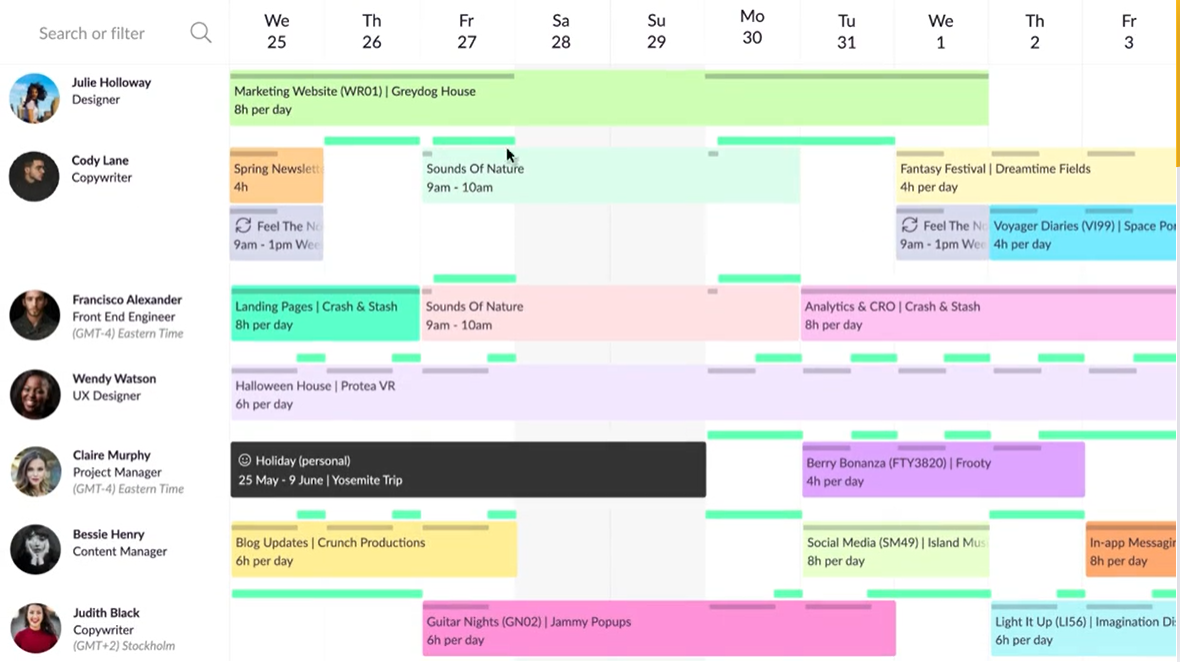
Resource Guru simplifies delegating tasks to your team. It has a super-intuitive UI that is easy to use and provides great visibility into project progression and workflow.
Why I Picked Resource Guru: The main benefit of the tool is that it provides full visibility into your team’s capacity so you can plan work and take on only as much as you can complete. With Resource Guru, it’s easy to view your team’s schedules in colorful Gantt charts that provide a clear overview of what everyone’s doing. The software has powerful leave management features, which means you won’t accidentally schedule tasks to unavailable employees.
Resource Guru Standout Features & Integrations
Features include resource scheduling, team management, time tracking, project planning, custom fields, drag and drop interface, real-time reporting, calendar sync, resource utilization reporting, availability scheduling, leave management, email notifications, API integration, and mobile app.
Integrations include Google Calendar, Microsoft Outlook Calendar, Apple Calendar, Calendly, and Fantastical. You can use Zapier to connect Resource Guru with 1,500+ apps, though this may incur additional costs.
Hub Planner
Best for midsized to large companies who want extended features

Hub Planner is a dedicated resource management software with powerful resource planning features. You get access to time tracking via timesheets and the ability to create intuitive reports that show total resource spend.
Why I Picked Hub Planner: Resource managers can schedule work on an hourly, daily, weekly, or monthly basis. It’s easy to spot gaps in workload and give people tasks to keep busy. There is also a matching feature that lets you tag employees based on their skill or role, so you can easily find people qualified for the work you have in mind. Another cool feature is the project pipeline. This highlights upcoming work, which is useful for capacity planning. It has a heat map that allows you to identify production gaps quickly.
Hub Planner Standout Features & Integrations
Features include resource management, PTO planning, timesheets, reporting, skills matching, task management, templates, drag and drop scheduler, project budgets, approval flow, smart scheduler, and third-party integrations/add-ons.
Integrations include DIY options via their Hub Planner API and webhook. Or, open an account with Zapier for more options (may incur an additional cost).
LiquidPlanner
Best for its automatic resource leveling

LiquidPlanner is a predictive scheduling solution that helps users optimize project portfolios and individual projects by giving visibility into how much work can realistically get done and when. It incorporates estimation, prioritization, and dependency management, allowing you to assess more accurately which projects are most likely to succeed and which ones may need more resources or time.
Why I Picked LiquidPlanner: LiquidPlanner’s automatic resource leveling feature helps you optimize your team’s workload and allows you to see how much work can be completed in a given time frame. You can also automatically adjust the assigned tasks and deadlines for each team member based on availability. This ensures that no one is overloaded with work and that tasks are completed on time. The feature is also flexible, so you can specify which tasks are more critical than others and adjust the level of resources accordingly.
LiquidPlanner’s forecasting engine is a comprehensive tool that helps you accurately predict project completion timelines. Using past performance records and present progress information, the software gives you a comprehensive view of potential risks or delays that could interrupt the timeline. LiquidPlanner’s ranged estimation feature allows users to estimate the amount of time it will take to complete a task by providing a range of possible values. This range can be based on difficulty, uncertainty, or the user’s experience.
LiquidPlanner Standout Features & Integrations
Features include dynamic scheduling, predictive analytics, project management, task dependencies, time tracking, team collaboration, resource management, workload reporting, project portfolio management, custom fields, Gantt chart view, mobile app, email notifications, API integration, and security and data encryption.
Integrations are available only through custom built connections using LiquidPlanner’s API.
Projectworks
Best resource planning software for professional services providers

Projectworks is a professional services automation platform with resource planning and management, time and expense tracking, and invoicing capabilities. The software is designed for companies in the professional services industry to facilitate more effective project management.
Why I picked Projectworks: This platform is especially suited to service providers, with resource planning features like skills mapping, invoicing, and leave management. Timesheets can be linked to invoices to keep track of what’s been paid out and what hasn’t, and the expenses feature includes hosting fees, contractor invoices, and travel expenses.
The tool also offers business intelligence analytics and reports. Project reports give insights into what was planned vs. the actual outcome, and margin reports can be produced by project, customer, individual, or team. The software can also give predictive insights like capacity and revenue forecasting.
Projectworks standout features & integrations
Features include time tracking, invoicing based on T&M, fixed price, or manual billing, expense reporting, skills mapping, revenue and capacity forecasting, and leave management.
Integrations include Azure DevOps, Hubspot, Jira, MYOB, QuickBooks, and Xero, and a paid Zapier account unlocks additional integrations.
Mosaic
Best for productivity reports & optimization analytics

Mosaic is a modern resource management software purpose-built for project teams and time-billing companies. They offer resource planning, project management, workload forecasting, hiring insights via role demand, capacity planning, profit and loss analysis, budget and time tracking, and performance dashboards.
Mosaic is a leading resource management software that helps businesses optimize their resources for maximum efficiency. Its intuitive interface and comprehensive features enable users to manage multiple aspects of their operations with ease. With Mosaic, businesses can better organize, track, and coordinate the use of their resources in order to maximize productivity.
The first step to using Mosaic as a resource management software is creating an account on its platform. Once set up, users can start inputting data about their resources into the system. This data includes information about employees’ availability, cost tracking for specific projects or tasks, material costs associated with different processes, and more. By having this information readily available in one place, users gain insight into how they are using their resources while also ensuring they have access to up-to-date records at all times.
Mosaic Standout Features & Integrations
Features include resource scheduling, team collaboration, time tracking, project planning, budget tracking, custom fields, drag and drop interface, real-time reporting, capacity planning, utilization reporting, email notifications, API integration, and a mobile app.
Integrations include Quickbooks, Unanet, Deltek, Asana, Salesforce, Jira, Workday, SAP, Oracle, and many other software applications.
Other Resource Planning Software
There are tons of resource planning tools out there. Including plenty of great options that didn’t make our list. Here are some of them:
-
Best for what-if resource modeling for schedule planning
-
Best for commerce-based resource planning
-
Best as a JIRA add-on
-
Best for manufacturing companies
-
Best for demand forecasting
-
Best resource planning software for agencies or consultancies
-
Best for mid-market companies
-
Best for software developers
-
Best for flexibility & customizability
-
Best resource planning within a project management tool
-
Best for its role-based resource allocation prior to staffing
-
Best for professional services companies
-
Best for comprehensive resource management
-
Best for smart allocation of resources
-
Best for time tracking
-
Best for working across entire organizations
-
Best for centralizing communication
-
Best for cutting administrative work
-
Best for tailored industry use cases
-
Best for managing inventory
-
Best for multi-language support
-
Best for getting started quickly
-
Best for resource scheduling
-
Best for customizations
-
Best resource management software for enterprise
-
Best for those who need a custom solution
-
Best for IBM i users
-
Best for professional services
-
Best for people-centered businesses
-
Best for optimization billable hours


Selection Criteria For Resource Planning Software
Selecting resource planning software involves a detailed evaluation of its functionality to ensure it meets the specific use cases that matter most to organizations. My criteria, derived from personal trials and extensive research, reflect a comprehensive approach to choosing the best tools for this category.
Core resource planning software Functionality (25% of final scoring): Common features for resource planning software typically include real-time visibility, advanced reporting, integration capabilities, automated resource allocation, forecasting, collaboration tools, customizable dashboards, capacity planning, timesheet tracking, and user access controls. To be considered for inclusion on my list of the best resource planning software, the solution had to support the ability to fulfill common use cases:
- Efficient allocation and utilization of human and material resources
- Accurate project scheduling to meet deadlines within budget constraints
- Facilitated collaboration and communication among project teams
- Detailed reporting for informed decision-making
- Integration with existing business systems for streamlined operations
Additional Standout Features (25% of final scoring): Identifying unique features that set a tool apart is crucial. I look for innovations such as AI-driven forecasting and machine learning-enhanced efficiency optimizations. Exploring these features involves testing for their impact on real-world use cases, such as how effectively they can predict resource needs or streamline complex workflows.
Usability (10% of final scoring): The balance between power and simplicity is key. Therefore, I look at the following items:
- A user-friendly interface, perhaps with drag-and-drop scheduling capabilities, is essential for quick adoption and efficient use.
- Role-based access controls that are easy to configure ensure that team members have the right level of access without overwhelming them with unnecessary complexity.
Onboarding (10% of final scoring): A smooth transition to a new tool significantly impacts its success.
- I value the availability of comprehensive training materials, including videos, templates, and interactive tours, which facilitate quick, effective learning.
- The presence of responsive chat support or scheduled webinars can greatly enhance the onboarding experience, ensuring users quickly realize the software’s value.
Customer Support (10% of final scoring): Responsive, knowledgeable customer support is non-negotiable.
- Evaluating this involves looking at the breadth of support options available, such as live chat, email, phone support, and the quality of the responses received.
- Support responsiveness and the depth of assistance provided indicate how well a vendor can assist with both routine and complex issues.
Value For Money (10% of final scoring): Ensuring affordability without compromising on essential features is key.
- I assess whether pricing structures are transparent and scalable, catering to businesses of various sizes.
- The inclusion of critical features at each pricing tier, compared to the overall cost, indicates whether a tool offers true value for money.
Customer Reviews (10% of final scoring): Feedback from existing users offers invaluable insights.
- I look for patterns in user testimonials regarding software reliability, ease of use, and customer service quality.
- High ratings in user satisfaction, particularly in areas like ease of use and customer support, often correlate with a product’s effectiveness and user friendliness.
Through this comprehensive evaluation framework, potential project managers can identify resource planning software that not only meets their immediate needs but also offers scalability, ease of use, and exceptional support as their projects and organizations grow.
Trends In Resource Planning Software For 2024
These tools are more crucial than ever in assisting organizations to efficiently plan, schedule, and manage resources like employees, equipment, and facilities. Here’s a glimpse into the latest trends, functionalities, and demands shaping the future of resource planning software:
- Integration and Automation: The most rapidly evolving features in resource planning software include advanced integration capabilities and automation of resource allocation. Tools like Wrike and ClickTime are leading the way with their extensive integrations with popular file management, sales, marketing software, and automation features that streamline planning and resource allocation processes.
- User-Friendly Dashboards and Visualizations: Tools such as Hub Planner and 10,000ft by Smartsheet are focusing on user-friendly interfaces with visual dashboards, drag-and-drop scheduling, and heat maps for identifying gaps in resource utilization. The trend here is toward a simple UI that can help the user navigate a plethora of features without getting visually overwhelmed.
- AI and predictive analytics: The trend towards leveraging AI for resource planning is gaining traction. For example, Forecast.app uses AI to offer detailed insights into team workload, available capacity, and task assignment efficiency, representing a novel approach to managing and optimizing resource allocation.
Declining Features
- While specific features becoming less important were not explicitly mentioned, it can be inferred that standalone, non-integrated tools, and those lacking real-time data and predictive capabilities, are less sought after. The focus is shifting towards comprehensive solutions that offer a blend of real-time tracking, automation, and integration with other business tools.
These trends underscore the growing need for tools that not only manage resources efficiently but also provide strategic insights to optimize project delivery and organizational performance.
What Is Resource Planning Software?
Resource planning software is a tool that helps organizations efficiently manage human resources, time, and materials. This software typically includes resource allocation, scheduling, task management, time tracking, and forecasting features to help you make informed decisions about how to best use resources to meet project demands.
You can use this software to create comprehensive resource plans that outline the allocation of team members, equipment, and other resources throughout the project lifecycle. By having a clear overview of resource availability and demand, you can identify potential conflicts, allocate resources efficiently, and have better cost control.
Features Of Resource Planning Software
Selecting the right resource planning software is pivotal for organizations aiming to optimize the use of their employees, equipment, and facilities. Here are the most important features to look for:
- Real-Time Visibility: Offers instant access to the status of resources and projects. This feature is crucial for keeping projects on track and adjusting plans dynamically to meet deadlines.
- Advanced Reporting and Analytics: Generates detailed reports and analytics. This helps in understanding resource utilization patterns and making data-driven decisions to improve project outcomes.
- Integration Capabilities: Connects seamlessly with other business tools. Integration ensures that resource planning software works in harmony with other systems, enhancing workflow and data consistency.
- Automated Resource Allocation: Automates the process of assigning resources to tasks. By reducing manual effort, this feature ensures optimal use of resources and prevents over or underutilization.
- Forecasting and Demand Planning: Predicts future resource needs based on historical data. Accurate forecasting helps in planning for future projects and avoiding resource shortages or excesses.
- Collaboration Tools: Facilitates communication and collaboration among team members. Effective collaboration is key to aligning resources with project goals and ensuring everyone is on the same page.
- Customizable Dashboards: Provides personalized views of key metrics. Customizable dashboards allow users to focus on the information that matters most to them, improving efficiency and insight.
- Capacity Planning: Assesses the availability of resources over time. This feature is essential for ensuring that there are enough resources available to meet project demands without overcommitting.
- Timesheet and Expense Tracking: Tracks time and expenses against projects. This helps in monitoring project costs, billing accurately, and managing budgets effectively.
- User Access Controls: Manages permissions and access to information. Proper access controls ensure that sensitive information is protected and only accessible to authorized users.
Choosing a resource planning software equipped with these features can significantly enhance the efficiency and effectiveness of resource management within an organization. By providing a comprehensive toolset for planning, scheduling, and analyzing resources, businesses can ensure that their projects are delivered on time, within budget, and with optimal use of available assets.
Benefits of Resource Planning Software
Resource planning software plays a crucial role in the strategic and operational facets of project management, offering a suite of benefits that enhance efficiency and productivity for both users and organizations. Here are five primary benefits:
- Optimized Resource Utilization: Ensures the right resources are used at the right time. This benefit means that resources, whether human, financial, or material, are allocated efficiently across projects, reducing idle time and maximizing productivity.
- Enhanced Visibility and Control: Provides a comprehensive overview of all resources and projects. Having a centralized view allows project managers to make informed decisions, anticipate bottlenecks, and adjust project plans proactively to meet deadlines and budgets.
- Improved Planning and Forecasting: Facilitates accurate project planning and resource forecasting. This feature helps in predicting future resource needs, enabling organizations to plan their projects and resource allocations more effectively to meet anticipated demands.
- Increased Collaboration and Communication: Promotes effective communication among team members. By centralizing information and facilitating easy access to project data, team members can collaborate more efficiently, ensuring everyone is aligned with project goals and timelines.
- Streamlined Project Reporting and Analytics: Automates and simplifies the reporting process. With advanced reporting capabilities, project managers can easily track project progress, monitor resource utilization, and generate insights to drive continuous improvement.
These benefits not only lead to better project outcomes but also contribute to the strategic success of the organization.
Costs & Pricing For Resource Planning Software
When exploring resource planning software, it’s vital for software buyers, especially those with little to no experience, to understand the various plan and pricing options available.These tools offer a range of functionalities tailored to different business needs, from simple project tracking to complex resource forecasting and allocation. Here is a simplified breakdown of typical plan options you might encounter:
Plan Comparison Table For Resource Planning Software
| Plan Type | Average Price | Common Features |
|---|---|---|
| Free | $0 | Basic resource scheduling, limited projects, basic reporting, community support |
| Entry-level | $10-$20 /user/month | Resource scheduling, project tracking, reporting, email support |
| Mid-range | $20-$50 /user/month | Advanced scheduling, real-time collaboration, enhanced reporting, priority support |
| Premium | $50-$100 /user/month | Comprehensive resource management, custom integrations, advanced analytics, dedicated support |
Each plan is designed to cater to different organizational needs, from small teams just starting out with resource planning to large enterprises requiring extensive customization and support.
As you consider these options, focus on the specific needs of your organization and the value each plan offers in relation to those needs. Selecting the right plan involves balancing the features you require against the budget you have allocated for resource planning software.
Resource Planning Software FAQs
Find answers to common questions people ask about this topic in their search for the ideal resource management solution.
What is resource planning?
Resource planning is the process that determines how you assign resources in a project. For example, you assign a resource to a specific task based on their skills and availability. Besides resource allocation, resource planning helps you plan for the future needs of your team. You take time to analyze what the project demands and see if you have the people for it.
This process happens numerous times during the planning and execution phases of your projects, as you adjust your plan. Among the benefits are saving time, money, and making your clients happier. Find more about the benefits of resource planning.
Which software is used for resource management?
Two main types of software are used for resource management.
- A project management tool
- A best-of-breed resource management tool
The first one is usually the most comfortable option, as you have both project and resource management tools in one. However, it also means that you might not have access to the full feature set that a best-of-breed solution will give you. For example, you might have access to resource workload information and timesheets, but not to the time tracking details and invoicing that come with a niche solution.
What are the key features of resource planning software?
Each of these tools puts a unique spin on resource planning. But most still have plenty in common. Here are some of the key features to look out for.
- Advanced project scheduling: This includes any features that will help you optimize resource planning. Look for extra functionality, like the ability to search for employees based on skills & roles, or capacity management that is particularly important in software development teams.
- Drag-and-drop allocations: The power of a simple drag when planning resources is immense. Usually, RAG indicators will signal which resources need attention. This feature will help you reduce someone’s workload, allocate them to a new project, or move around tasks in seconds.
- Flexible project reporting: Project tracking is necessary to show how work is progressing. With reporting features you can track project metrics like hours worked, remaining budget, and open/closed orders.
- Forecasting: features to predict how your project is likely to proceed. They show you when you need to intervene to get a project back on track.