
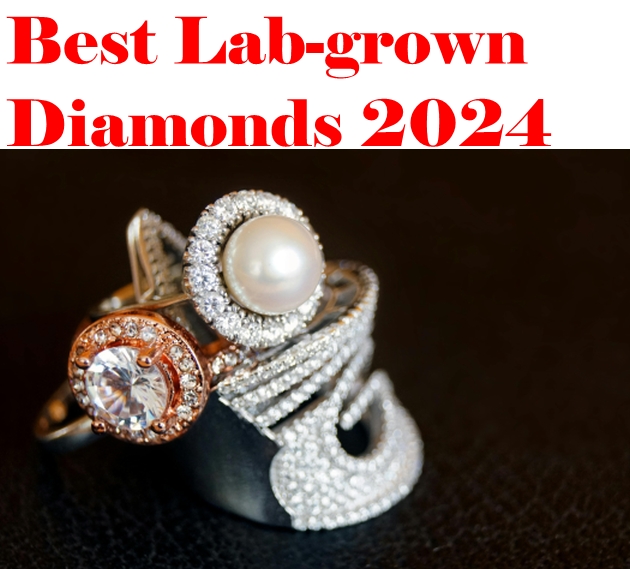
Lab-grown diamonds
Lab-grown diamonds, also known as synthetic or man-made diamonds, are diamonds produced in a controlled laboratory setting using advanced technologies like Chemical Vapor Deposition (CVD) or High Pressure High Temperature (HPHT). These diamonds possess the same physical, chemical, and optical properties as natural diamonds but are created in weeks rather than forming over billions of years underground.
Lab-grown diamonds are popular for being more affordable (typically 30-40% cheaper than mined diamonds), ethically sourced, and often considered environmentally friendlier, as they avoid the social and environmental impacts of traditional diamond mining. They are increasingly used in jewelry, especially for engagement rings, and are certified by major gemological institutions like the GIA and IGI.
Key Benefits:
- Ethical & Sustainable: No mining, less environmental impact.
- Cost-effective: More affordable than natural diamonds.
- Same Quality: Indistinguishable from mined diamonds in terms of appearance and structure.
Lab-grown diamonds are becoming a preferred choice for those seeking ethical luxury and affordability. Here are some key statistics and insights related to the growing lab-grown diamond industry:
1. Market Growth
- Market Size:
- The global lab-grown diamond market was valued at around $19.3 billion in 2021, and it is projected to reach $49.9 billion by 2030, growing at a CAGR (Compound Annual Growth Rate) of 9.4% during the forecast period (2022-2030) .
- Share of the Diamond Market:
- Lab-grown diamonds currently account for 7-8% of the overall diamond jewelry market, but this share is expected to grow as consumer demand increases .
2. Production Statistics
- Annual Lab-Grown Diamond Production:
- In 2020, global production of lab-grown diamonds reached 6-7 million carats. This marked a sharp rise from just 2 million carats in 2018. By comparison, natural diamond production was approximately 111 million carats in 2020 .
- Expected Future Production:
- Lab-grown diamond production is expected to exceed 19-20 million carats by 2030 as technological advancements make production more efficient and cost-effective .
3. Consumer Demand and Trends
- Growing Popularity:
- In 2022, about 70% of consumers in the U.S. who bought an engagement ring were open to purchasing lab-grown diamonds due to factors such as price, ethics, and environmental concerns .
- Millennials and Gen Z are particularly driving demand, as they are more conscious of sustainability, social issues (e.g., ethical concerns around “blood diamonds”), and cost-effectiveness.
- Price Differentials:
- Lab-grown diamonds are typically priced 30-40% lower than their natural counterparts of the same size and quality, which makes them an attractive option for budget-conscious buyers .
4. Technological Advances
- CVD and HPHT Methods:
- The two main methods for growing diamonds in labs are Chemical Vapor Deposition (CVD) and High Pressure High Temperature (HPHT). Both techniques have made significant advancements in producing high-quality, gem-grade diamonds, with CVD being more common for jewelry applications.
- Quality Improvements:
- In the early days, lab-grown diamonds were often criticized for imperfections, but advances in technology have led to lab-grown diamonds that are virtually indistinguishable from natural diamonds in terms of clarity, color, and overall quality. Up to 60% of all lab-grown diamonds now rank between VS1 and VS2 on the clarity scale, considered high-grade .
5. Environmental and Ethical Impact
- Sustainability:
- Lab-grown diamonds are often touted as being more sustainable than mined diamonds, primarily because they avoid the ecological damage associated with mining operations. Lab diamonds require less land disturbance, and studies have shown that carbon emissions from lab-grown diamonds are generally lower than those of mined diamonds .
- Water and Energy Usage:
- Although lab-grown diamonds require energy (for the high-pressure and high-temperature environments needed), they use up to 7 times less water than traditional diamond mining .
6. Regional Market Trends
- China and India:
- China and India dominate the global production of lab-grown diamonds, with China accounting for 50-60% of lab-grown diamond production. India is emerging as a leader in cutting and polishing lab-grown diamonds .
- U.S. Market:
- The U.S. remains the largest market for lab-grown diamonds in terms of demand, particularly in the engagement ring and bridal jewelry sectors, where many consumers are opting for lab-grown stones due to ethical and price considerations .
7. Competitive Landscape
- Major Companies:
- Leading companies in the lab-grown diamond market include De Beers (via their Lightbox brand), Pure Grown Diamonds, Diamond Foundry, and New Diamond Technology. De Beers’ entry into the lab-grown diamond space in 2018 was a major signal of the industry’s growth potential .
- Price Declines:
- Prices of lab-grown diamonds have dropped by 50-60% since 2016 due to increased competition and improvements in production efficiency .
8. Forecast for 2030 and Beyond
- The lab-grown diamond market is expected to outpace natural diamond growth due to rising consumer interest in ethical sourcing and environmental sustainability. The natural diamond market will likely continue shrinking as production declines and consumer preferences shift towards lab-grown alternatives .
Summary
| Key Statistic | Details |
|---|---|
| Global Lab-Grown Diamond Market Size (2021) | $19.3 billion |
| Projected Market Size (2030) | $49.9 billion |
| Annual Production (2020) | 6-7 million carats |
| Expected Production by 2030 | 19-20 million carats |
| Price Difference | Lab-grown diamonds are 30-40% cheaper than natural diamonds |
| Market Share of Lab-Grown Diamonds | 7-8% of the total diamond market |
| Leading Producers | China (50-60% of production), India (cutting & polishing leader) |
| Technology Methods | CVD (Chemical Vapor Deposition), HPHT (High Pressure High Temperature) |
| Price Decline Since 2016 | 50-60% |
| Environmental Impact | Uses up to 7 times less water than mining; lower carbon emissions |
Lab-grown diamonds are experiencing rapid growth, driven by advancements in technology, increasing consumer demand for ethical and sustainable products, and significant price advantages over natural diamonds.
In this article, we will present the best offerings of Lab-grown diamonds. we will present the features, pros and cons, faqs, and comparison table.
Best lab-grown diamonds
Here’s a comparison of major companies producing lab-grown diamonds, highlighting their products, pros and cons, and answers to some frequently asked questions (FAQs).
1. De Beers (Lightbox Jewelry)
- Products:
- Sells lab-grown diamonds for jewelry, focusing on fashion jewelry rather than engagement rings.
- Offers diamonds up to 1 carat in size, in various colors (white, pink, and blue).
- Prices start at $800 per carat.
- Pros:
- Affordable pricing: Their pricing structure is transparent, charging a fixed rate per carat.
- Branded trust: De Beers is a well-known name in the diamond industry, which lends credibility.
- Simple color options: Offers colored diamonds, like pink and blue, at relatively low prices.
- Cons:
- Limited customization: Less focus on larger stones or high-end engagement rings.
- Not graded: Unlike most other lab-grown diamonds, Lightbox diamonds are not graded by the GIA or other independent gemological institutions, which could be a concern for some buyers.
- FAQs:
- Are Lightbox diamonds real diamonds?
- Yes, they are real diamonds, just grown in a lab using CVD technology.
- Why aren’t Lightbox diamonds graded?
- Lightbox argues that since all their diamonds meet a specific standard, grading isn’t necessary.
- Are Lightbox diamonds real diamonds?
2. Diamond Foundry
- Products:
- Specializes in high-quality, ethically produced diamonds.
- Offers custom engagement rings, loose diamonds, and larger carat stones, with diamonds ranging up to 10 carats.
- Focus on environmentally sustainable production, using 100% renewable energy.
- Pros:
- Environmentally friendly: Diamond Foundry uses solar energy to power its labs, emphasizing sustainability.
- High-quality stones: Offers graded diamonds (by GIA) with a focus on clarity and color.
- Large stones available: Can produce diamonds up to 10 carats, competing directly with mined diamonds.
- Cons:
- Higher price point: Due to their ethical production methods, prices are generally higher than competitors.
- Niche audience: Targeted more towards consumers who prioritize sustainability, which might not appeal to everyone.
- FAQs:
- Are Diamond Foundry diamonds more expensive?
- Yes, they tend to be pricier due to the use of renewable energy and their high-quality production standards.
- How does Diamond Foundry ensure ethical production?
- The company uses renewable energy and emphasizes zero carbon footprint, differentiating itself from traditional mining and other lab-grown producers.
- Are Diamond Foundry diamonds more expensive?
3. Pure Grown Diamonds
- Products:
- Offers a wide range of lab-grown engagement rings, wedding bands, and loose diamonds.
- Diamonds up to 3 carats in size.
- Focuses on both ethical and affordable luxury.
- Pros:
- Affordable pricing: Prices are competitive and more affordable compared to traditional diamonds.
- Wide selection: Offers a range of shapes, sizes, and cuts.
- GIA certification: Their diamonds are graded and certified by GIA or IGI, providing transparency and quality assurance.
- Cons:
- Limited to certain markets: Pure Grown Diamonds are not as widely available globally.
- Less focus on environmental marketing: Although ethical, the company does not market its sustainability as strongly as some other competitors.
- FAQs:
- Are Pure Grown Diamonds certified?
- Yes, they are certified by leading gemological institutions like GIA and IGI.
- What sizes are available?
- Diamonds are available in various sizes, up to around 3 carats.
- Are Pure Grown Diamonds certified?
4. Brilliant Earth
- Products:
- Known for ethically sourced jewelry, Brilliant Earth offers a large selection of lab-grown diamonds, custom engagement rings, and loose diamonds.
- Emphasis on sustainability and conflict-free diamonds.
- Available in sizes up to 5 carats.
- Pros:
- Strong ethical focus: Brilliant Earth has built a reputation on sustainability, ethical sourcing, and transparency.
- Customization: Offers highly customizable engagement rings and other jewelry.
- Wide selection: Has a diverse range of diamonds in terms of size, cut, and clarity.
- Cons:
- Pricey: Generally, Brilliant Earth diamonds are more expensive due to their ethical branding.
- Slow shipping: Some customers report longer shipping times, particularly for customized items.
- FAQs:
- How are Brilliant Earth’s lab-grown diamonds produced?
- They use both CVD and HPHT methods, ensuring high quality while adhering to ethical standards.
- Can you customize rings at Brilliant Earth?
- Yes, Brilliant Earth offers extensive customization options for engagement rings and other jewelry.
- How are Brilliant Earth’s lab-grown diamonds produced?
5. New Diamond Technology
- Products:
- Focuses on producing high-quality, large lab-grown diamonds for engagement rings and other luxury jewelry.
- Known for pushing the boundaries of lab-grown diamond size, with stones reaching over 10 carats.
- Uses HPHT technology.
- Pros:
- Large carat sizes: One of the few companies that can produce extremely large stones (10+ carats).
- Innovative technology: Pioneers in using HPHT to create high-quality, large diamonds.
- Cons:
- Expensive: Larger stones and innovative technology drive up costs, making them more expensive than typical lab-grown diamonds.
- Smaller product range: Primarily focused on large stones and less on a wide range of smaller, affordable diamonds.
- FAQs:
- What technology does New Diamond Technology use?
- They use HPHT (High Pressure High Temperature) to grow large, high-quality diamonds.
- Are their diamonds certified?
- Yes, New Diamond Technology’s diamonds are certified by leading institutions like the GIA.
- What technology does New Diamond Technology use?
Summary Table:
| Company | Products | Pros | Cons |
|---|---|---|---|
| De Beers (Lightbox) | Fashion jewelry, colored diamonds (up to 1 carat) | Affordable pricing, trusted brand | No grading, limited focus on engagement rings |
| Diamond Foundry | Custom engagement rings, large diamonds (up to 10 carats) | Environmentally friendly, high-quality diamonds | Expensive, niche audience |
| Pure Grown Diamonds | Engagement rings, loose diamonds (up to 3 carats) | Affordable, GIA-certified, wide selection | Limited global availability |
| Brilliant Earth | Engagement rings, customizable jewelry, conflict-free diamonds | Strong ethical focus, wide selection, customizable | Expensive, longer shipping times |
| New Diamond Technology | Large lab-grown diamonds (10+ carats) | Produces very large stones, innovative technology | Expensive, limited focus on smaller diamonds |
General FAQs for Lab-Grown Diamonds:
- Are lab-grown diamonds real diamonds?
- Yes, lab-grown diamonds have the same physical, chemical, and optical properties as natural diamonds. They are real diamonds, just created in a laboratory rather than mined from the earth.
- How do lab-grown diamonds compare in price to natural diamonds?
- Lab-grown diamonds are typically 30-40% cheaper than natural diamonds of the same size and quality due to the differences in production costs.
- Can lab-grown diamonds be certified by GIA or IGI?
- Yes, most reputable lab-grown diamond companies offer GIA or IGI certification to ensure the quality of the diamond.
- Are lab-grown diamonds ethical and sustainable?
- Lab-grown diamonds are considered more ethical and environmentally friendly than mined diamonds because they do not involve environmentally destructive mining processes and are usually produced with fewer carbon emissions.
- Do lab-grown diamonds hold their value like natural diamonds?
- Historically, lab-grown diamonds do not hold value as well as natural diamonds on the resale market. They tend to depreciate more rapidly, but they are increasingly popular due to ethical and pricing factors.
This comparison highlights the leading companies, their product offerings, and the key pros and cons, helping consumers make informed decisions when purchasing lab-grown diamonds.
Conclusion
When choosing lab-grown diamonds, it’s important to consider several factors to ensure you’re getting both quality and value. Here’s an extended conclusion, incorporating examples and data:
- Certification: Always opt for diamonds that come with a certification from reputable organizations like the Gemological Institute of America (GIA) or International Gemological Institute (IGI). For example, Brilliant Earth and Pure Grown Diamonds offer lab-grown diamonds that are graded based on the 4Cs—cut, clarity, color, and carat—ensuring transparency and quality. Certification guarantees that the diamond meets industry standards, regardless of whether it’s lab-grown or mined.
- 4Cs (Cut, Clarity, Color, and Carat): Focus on the same 4Cs used to evaluate natural diamonds. For instance, Diamond Foundry produces high-quality lab-grown diamonds with superior cuts and clarity, some grading as high as VS1 (Very Slightly Included) and D-F color (the highest color grades). Consumers can find diamonds that meet their preferences without sacrificing quality.
- Clarity: The majority of lab-grown diamonds fall within VS1-VS2 clarity, meaning they have minor inclusions that are hard to detect even under magnification.
- Cut: The cut impacts brilliance. Companies like New Diamond Technology specialize in large, beautifully cut stones, some over 10 carats, demonstrating that lab-grown diamonds can match or exceed the size and quality of mined diamonds.
- Ethical and Environmental Impact: Lab-grown diamonds have a smaller ecological footprint compared to mined diamonds. A report by Frost & Sullivan indicates that growing diamonds in a lab uses 7 times less water and results in significantly lower carbon emissions. For consumers prioritizing sustainability, companies like Diamond Foundry utilize 100% renewable energy in their production process, making them a top choice for eco-conscious buyers.
- Cost-Effectiveness: Lab-grown diamonds are typically 30-40% cheaper than mined diamonds of equivalent quality. For example, Lightbox Jewelry by De Beers offers 1-carat diamonds for $800, whereas a natural diamond of the same quality may cost over $3,000. This affordability allows consumers to purchase larger or higher-quality diamonds within their budget.
- Trusted Brands: Companies like Brilliant Earth, Pure Grown Diamonds, and Diamond Foundry are well-known for offering a wide selection of lab-grown diamonds in various shapes and sizes, from engagement rings to custom pieces. Choosing trusted brands ensures reliability in both quality and ethical standards.
Conclusion Summary with Data:
- Certification: Choose certified diamonds from GIA or IGI for verified quality.
- 4Cs: Balance cut, clarity, color, and carat based on personal preference, with lab-grown diamonds often in the VS1-VS2 clarity range.
- Environmental Impact: Lab-grown diamonds use 7 times less water and have a lower carbon footprint.
- Cost: Lab-grown diamonds are 30-40% more affordable than mined diamonds.
- Brand Examples: Brilliant Earth, Pure Grown Diamonds, and Diamond Foundry are reliable sources for quality and ethical diamonds.
By focusing on these factors and considering examples like Lightbox’s affordable pricing or Diamond Foundry’s eco-friendly production, you can confidently choose a lab-grown diamond that matches your values, style, and budget.